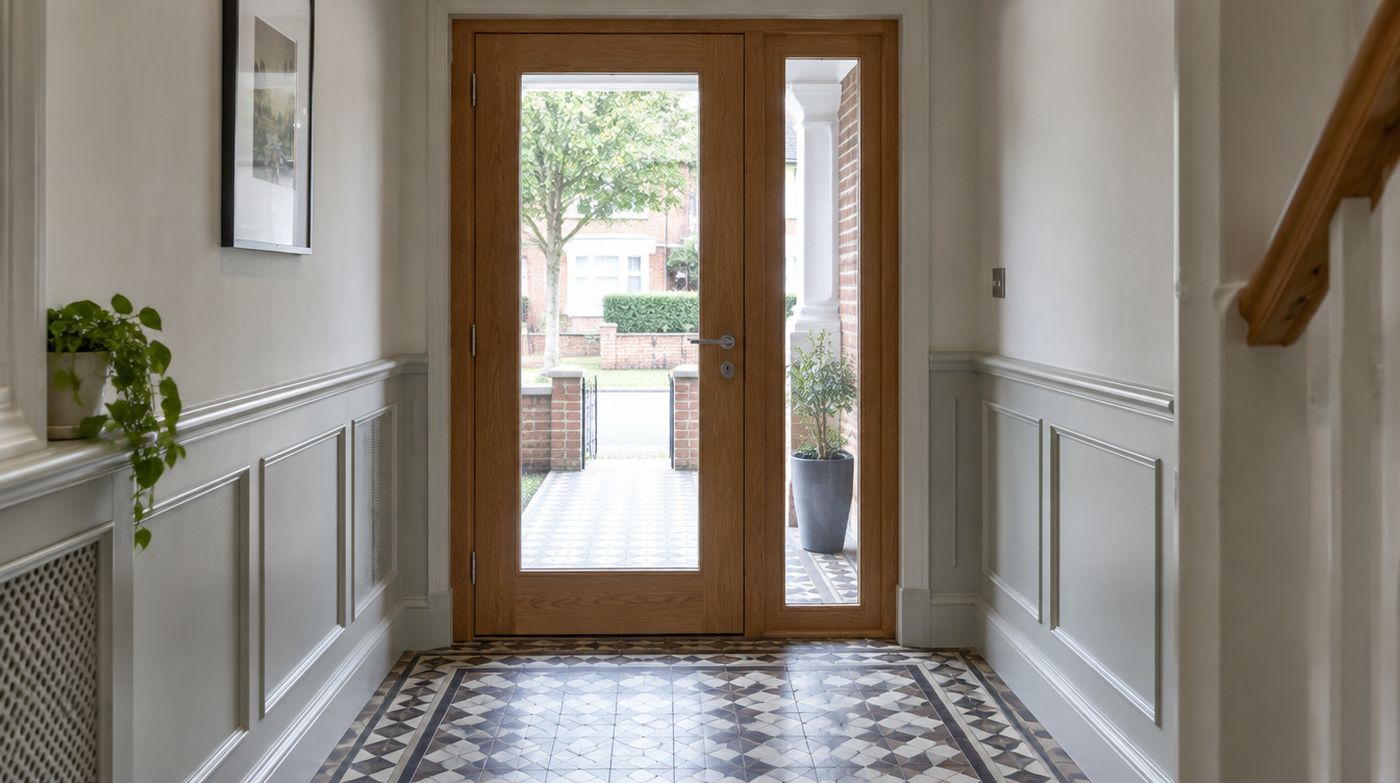
Toughened glass in London, made where the law requires it
Toughened safety glass cut, processed and made to your sizes in our own Wembley workshop. Door panels, side screens, low level glazing and broken panel replacement, supplied with the marking that proves what it is.
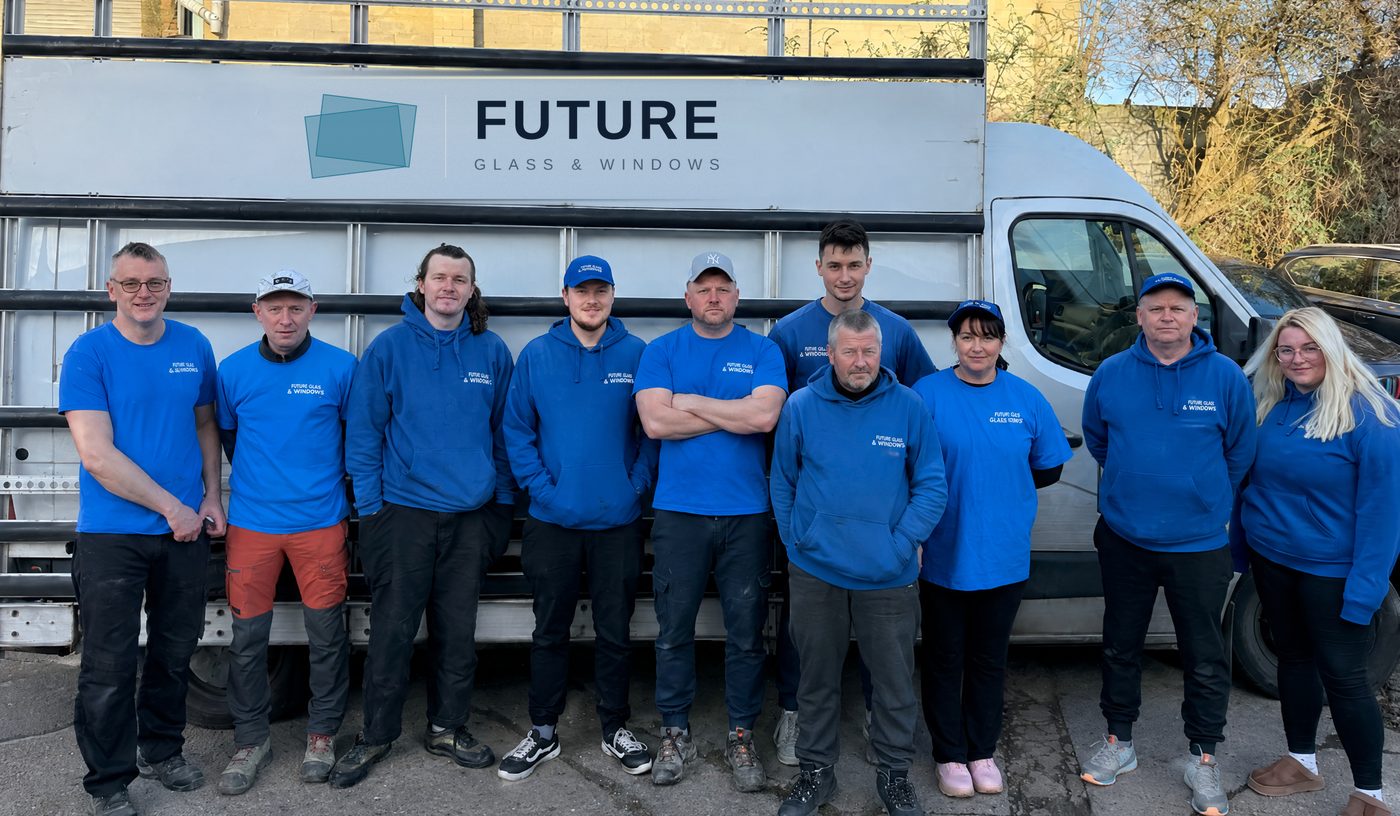
The people who survey, make and fit the work. Our own teams and our own workshop at 6 Atlas Road, Wembley HA9 0JH.
Our own workshopGlass cut, processed and made up in Wembley HA9 — not bought in
FENSA registeredInstallations registered for building regulations compliance
Surveyed, not estimatedWe measure on site before anything is made
Local to LondonMon–Fri 8am–5pm · Wembley workshop
What we do
Where toughened glass is the answer
There are places where toughened glass is a choice and places where it is a legal requirement. Most of the work we do sits in the second group, which is why we lead with the standards rather than the price.
Door panels & side screens
Glazing in a door, and in any panel within 300mm of it up to 1500mm from the floor, is a critical location under Approved Document K. Safety glass is mandatory there.
Critical location glazing
Marked to BS 6206 Class A
Patterned and clear
Broken panel replacement
A toughened panel that has gone cannot be repaired, only remade. We measure from the frame and the surviving opening, not from the fragments.
Measured from the frame
Boarding arranged if needed
Usually measured same week
Low level & full height glazing
Any glazing below 800mm from floor level is a critical location. A great deal of older London glazing was never compliant and only gets found at survey or sale.
Below 800mm from floor
Full height screens
Compliance stated in writing
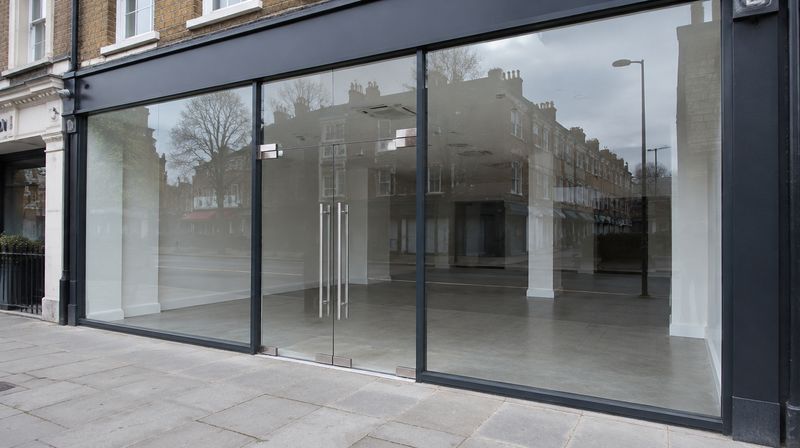
Shopfronts & commercial glazing
Shopfront glass, internal screens and display glazing in thicker sections, with holes and cut-outs for handles, locks and patch fittings.
10mm, 12mm and 15mm
Patch fitting cut-outs
Commercial thicknesses
Toughened glass for doors & fittings
Glass processed for hinges, locks, patch fittings and floor springs. Every hole has to exist before the glass is toughened.
Hinge and lock cut-outs
Patch fitting preparation
Radius corners
Heat soaked glass
A second heat process that forces most panes carrying a nickel sulphide inclusion to fail in the oven rather than years later in the building.
To BS EN 14179
For overhead and balustrades
Specified, not assumed
The work
What it looks like done properly
Illustrative images of the systems described above. Specification and finish are confirmed in writing with your quotation.
What most people get wrong about toughened glass
A good share of the toughened glass in London that we are called out to replace never failed at all. It was wrong from the day it went in. Ordinary annealed glass in a door panel, a side screen glazed in 4mm float, a low window beside a staircase that nobody thought about. The pane breaks into long blades instead of harmless crumbs, somebody is cut or very nearly is, and only at that point does anyone look at the corner of the glass to see whether it was ever safety glass in the first place.
That is the real subject of this page. Toughened glass is not a premium upgrade or a nicer finish. In certain positions in a building it is a legal requirement, and in those positions the only thing that proves compliance is a permanent mark on the pane. No mark, no proof. A surveyor, a licensing officer or an insurer will treat an unmarked pane in a critical location as non-compliant, and they are right to.
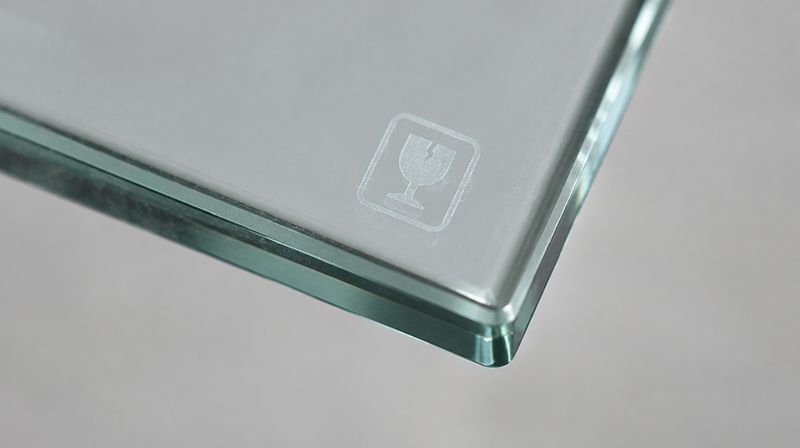
The stamp in the corner is the whole argument
Every properly toughened pane leaves the furnace carrying a permanent mark, sandblasted, acid etched or ceramic fired into one corner. It is usually 10 to 20mm across and easy to miss on a dirty window. Find it, clean the glass around it with a damp cloth, and read what it says. On a sealed double glazed unit the mark is often on the inner face of one of the panes, so you may be reading it through glass.
The mark is not decoration. It identifies who processed the pane, the standard it was made to and, where relevant, the class of safety glazing it satisfies. Learn to read it and you can audit a whole house in twenty minutes without taking anything apart.
The processor name or logo tells you who toughened it, which matters if you want matching panes later.
A product standard reference, usually BS EN 12150 for thermally toughened soda lime silicate safety glass.
A safety glazing class, commonly BS 6206 Class A, which is what building control looks for in a critical location.
Sometimes a kitemark or third party certification mark, and on heat soaked glass a reference to BS EN 14179.
If there is no mark anywhere on the pane, assume it is annealed. People sometimes argue that the mark wore off. It does not wear off. It is physically in the surface of the glass and it outlasts the frame.
Why so much London glazing does not meet current requirements
The requirement for safety glass in critical locations came in through the building regulations and tightened over time. Huge numbers of London homes were glazed or reglazed before it bit, and the stock that causes us the most trouble is from roughly the mid 1970s to the mid 1990s. Internal doors with a single large glazed panel, glazed side screens either side of a front door, full height windows in stairwells and landings in converted flats. All of it was legal when it was fitted and none of it is acceptable if you touch it now.
The awkward part is when this surfaces. Nobody inspects their own doors. It comes up in a homebuyer survey two weeks before exchange, in a letting agent inspection, during an HMO licensing visit, or after an insurance claim where the loss adjuster asks what the glass was. At that point it is urgent and expensive in a way it never needed to be, because replacing a glazed door panel with correctly marked toughened glass is a small job when it is planned and a scramble when it is not.
The things we will tell you not to buy
Toughened glass is the wrong answer more often than most suppliers will admit. It breaks completely when it breaks, and the whole pane leaves the opening. Anywhere that retention matters, that is a defect rather than a feature. Overhead glazing, roof lights, anything above a walkway or a seating area, and glass balustrades that people lean on all want a laminated product, sometimes a toughened laminated build up, so that broken glass stays in the frame.
Equally, plenty of positions do not need safety glass at all and you should not pay for it. A first floor bedroom window with a high cill, a fixed pane in the middle of a wall, a kitchen window over a worktop. If a glazing quote has toughened glass in every single opening with no explanation of why, ask the question. Either the person quoting has worked out which positions are critical locations and can tell you which ones and why, or they have specified the expensive option everywhere because it is easier than thinking.
If we survey your house and three panes need changing rather than the nine on your list, the quote will say three. We would rather lose the difference than have you pay for glass you do not need and then find out.
A cracked pane is not always a broken pane
A crack that starts at the edge of the glass, runs in perpendicular to it for 20 or 30mm and then curves away is almost never impact damage. That is thermal stress, and it means part of the pane got hot while another part stayed cold. The usual culprits in London are partial shade across a window from a neighbouring extension or a parapet, shop window posters and vinyl applied to the inside of the glass, boards or stock stacked hard against a shopfront, and radiators sitting a few centimetres from low level glazing.
This matters because people replace thermally cracked glass like for like and it cracks again in the same season. Toughened glass resists thermal stress far better than annealed glass, so sometimes toughening the replacement is the fix. Sometimes the fix is free and involves moving stock away from the window or taking the backing board out. We will tell you which, and if it is the free one we will say so on the survey.
How to order so it does not come back wrong
Nothing can be cut, drilled or notched once a pane has been through the furnace, so an error in the order is a remake and a second lead time. Measure the opening, not the broken glass, because fragments lie about their original size and a pane that has been in a frame for thirty years may have been cut to suit a frame that has since moved. Give us the glazing rebate dimensions and we will take off the right edge cover for the frame type. Tell us about every hole, cut out, hinge, patch fitting and lock position before the glass is made, with dimensions to the centre of each one.
If you are not confident measuring, do not guess. The survey is free across London, it takes a few minutes, and it moves the risk of a wrong pane onto us where it belongs. Our workshop is at 6 Atlas Road in Wembley, we cut, edge, process and toughen in house, and you can ring us on 020 4634 6045 between 8am and 5pm, Monday to Friday.
How it works
From first call to finished job
Four stages, and we tell you where you are at each one.
Sizes or survey
Send sizes and the position the glass sits in, or we measure. The position decides whether safety glass is a legal requirement.
Specification in writing
Thickness, toughened or laminated, edgework, cut-outs and the standard it will be marked to, all confirmed before anything is cut.
Processing
Cut, edged, drilled and notched, then toughened. After the furnace nothing can be altered, which is why this order never changes.
Fit or collect
Fitted by our own teams, or collected from Wembley. Safety glass carries its permanent mark on the pane.
Specification
The detail, in writing
Every quote states the glass build, the standards it is made to and the hardware. If a quote you are comparing does not, that is worth asking about.
Toughened to BS EN 12150, meeting BS 6206 Class A
Permanently marked so an inspector can verify it
Broken panel replacement, usually measured same week
4mm to 19mm, with holes and cut-outs made before toughening
HA9
Our own furnace on Atlas Road in Wembley, so the pane carrying the safety mark was made by the people who sold it to you.
Standard specification. Project-specific details are confirmed in your written quotation.
Item
Specification
Standard
Toughened to BS EN 12150. Classified as safety glazing under BS 6206 Class A and impact tested to BS EN 12600. Each pane is permanently marked.
Thicknesses
4mm to 19mm. 4mm and 6mm for most domestic door and window glazing, 10mm and 12mm for frameless doors and screens, 15mm and 19mm for structural applications.
Strength
Roughly four to five times the bending strength of annealed glass of the same thickness, and far better able to cope with thermal stress.
Break pattern
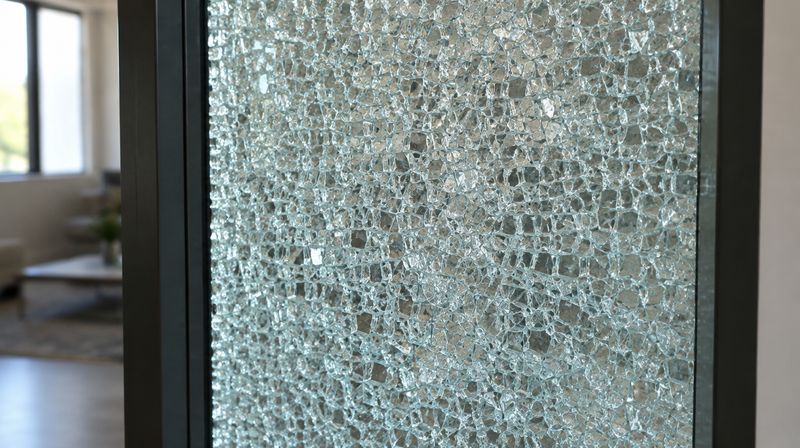
Disintegrates into small blunt fragments rather than long shards. That failure mode is the reason it counts as safety glass, and also the reason it cannot be repaired.
Processing order
Cutting, edgework, holes, notches and radius corners all happen before toughening. Nothing can be worked on the glass afterwards.
Heat soaking
Available to BS EN 14179 where the consequence of a spontaneous failure is serious. It reduces the risk substantially; no process removes it entirely.
FAQ
Common questions
How do I know if my glass has to be toughened?
Approved Document K defines critical locations: glazing in a door and in any side panel within 300mm of the door up to 1500mm from floor level, and any other glazing below 800mm from the floor. In those positions the glass must be safety glass, toughened or laminated, and permanently marked. Outside them it is a judgement about use rather than a legal requirement.
Can you toughen a pane I already have?
No, and neither can anyone else. Toughening is applied to glass that is already cut to its final size with every hole and cut-out in it. An existing pane cannot be put through the furnace and come back toughened. If you need toughened glass it is made from scratch.
Why can toughened glass not be cut?
The process leaves the surfaces in compression and the core in tension, and that locked-in balance is what gives the glass its strength. Breaking the surface anywhere releases it and the whole pane goes at once. There is no technique that gets round this.
My toughened panel shattered on its own. Why?
Spontaneous failure is usually one of three things: an edge chip that has been quietly growing, a fixing pinching the glass as the building moves, or a nickel sulphide inclusion inside the pane expanding over time. The third is rare and unpredictable, which is why heat soaked glass exists for applications where a failure would be serious.
Is toughened or laminated better?
They solve different problems. Toughened is stronger and cheaper, and when it fails it is gone. Laminated holds together on its interlayer, which is what you want overhead, in a barrier, or where security matters. For a door panel or a low window, toughened is usually the right call.
How quickly can you replace a broken panel?
We can usually measure within a few working days, and plain toughened panes are normally ready within a week of measuring. Patterned glass, thick sections and anything needing heat soaking take longer. If an opening needs making safe in the meantime we can arrange boarding.
In detail
Read up before you buy
A page on each part of what we do, written to answer the question properly rather than to sell.