Toughened glass for doors, from a broken panel to a frameless leaf
Door glass is the one place where getting the specification wrong is both a compliance problem and a safety problem. This page covers the three different jobs people mean by it, and the detail that has to be settled before the glass is made.
Three different jobs that all get called door glass
When someone rings about toughened glass for doors they usually mean one of three things, and the price, the lead time and the amount of information we need are different for each. Working out which one you have is the first useful step.
A pane inside a door
A timber, composite or uPVC door with glazed apertures. The door carries the load, the glass just fills the hole, and the pane is usually 4mm or 6mm sitting in a rebate behind beads. This is the most common job, it is the cheapest, and it is the one where people are most often sold a whole new door when a pane would have done.
A full glass door
A glass leaf with no frame, hung on patch fittings, glass hinges or a floor spring. The glass is the door, so it carries its own weight, the weight of the ironmongery and the force of being pushed and pulled thousands of times. 10mm or 12mm, every hole and notch machined before toughening, and no margin for error anywhere.
Side screens and over panels
The fixed glazing beside and above a door. Legally this is where most of the trouble sits, because glazing within 300mm of a door and anywhere up to 1500mm from floor level counts as a critical location, so it has to be safety glass whether or not the door itself is glazed. A great deal of older London glazing fails that test and nobody notices until a survey. We set out the regulations properly on our safety glass page rather than restating them here.
Thickness for toughened glass for doors
For a pane inside a door frame, the frame decides. 4mm is adequate in small apertures with a decent rebate, 6mm is the sensible default for anything larger or anything in a front door, and we tend to recommend 6mm for Victorian and Edwardian front doors in the inner boroughs because the openings are generous and the doors themselves flex when they slam.
For a frameless leaf the starting point is 10mm and there is a reason it is not less. The glass has to resist bending across its own width every time the door swings, and the holes for patch fittings are stress concentrations. 8mm doors exist and we will not make one for a main circulation route. 12mm is the right answer for a tall or wide leaf, a heavy closer, a door that gets heavy traffic, or an entrance door at street level in a shop or office.
Where we push back is on 12mm for a small internal door. A 760mm leaf in a flat in Tufnell Park does not need the weight, and the extra mass has to be carried by the hinges, the frame, the lintel and the fixings behind the plaster. Thicker glass on a door is not automatically a better door, it is a heavier one, and if the surrounding structure cannot take it you have moved the problem rather than solved it.
Every cut-out exists before the glass does
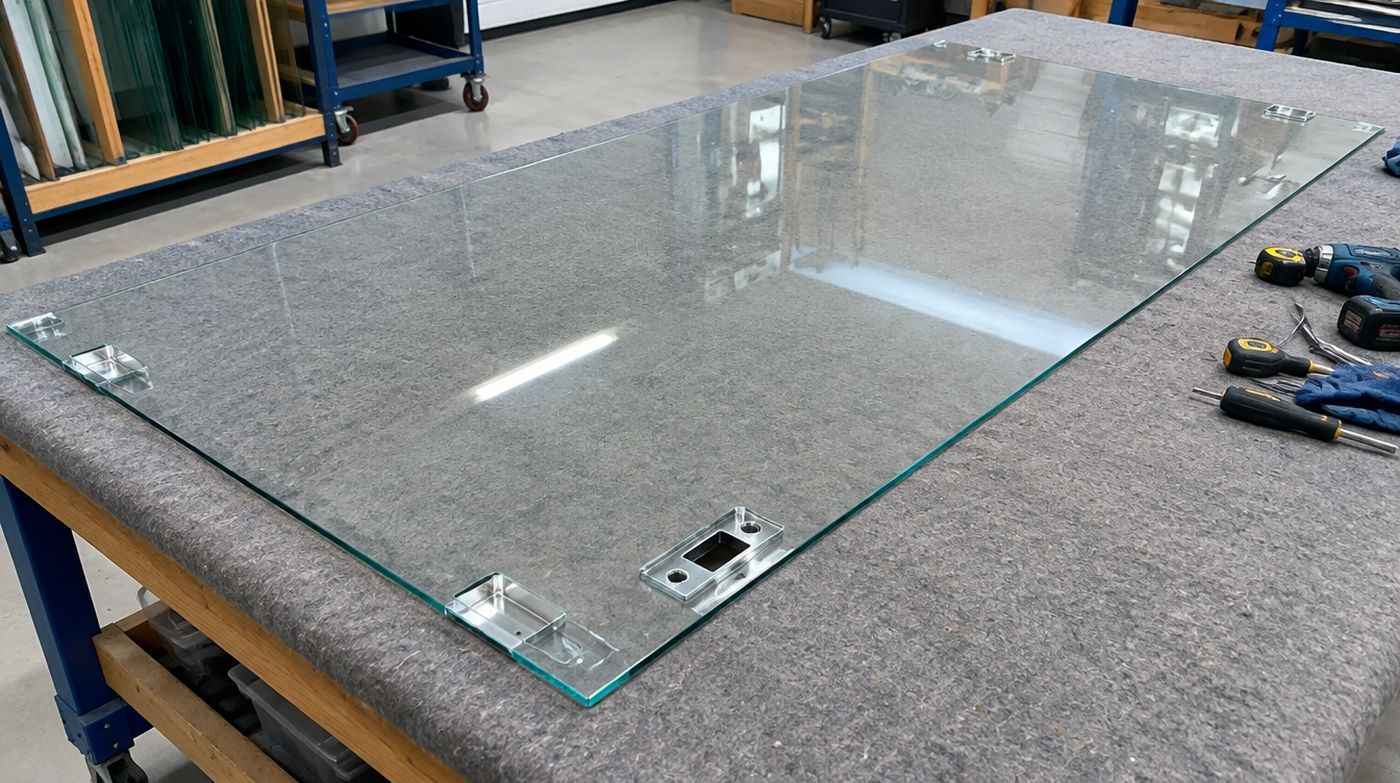
This is the part that catches people out. Toughened glass cannot be drilled, notched or ground after it leaves the furnace, so every hole for a lock, every notch for a patch fitting, every cut-out for a floor spring pivot and every radiused corner has to be machined into the annealed sheet first. The pane is then toughened around that geometry.
Which means the ironmongery has to be chosen before the glass is ordered. Not during the install, not after the glass arrives. The handle, the lock, the hinges, the closer and the floor spring between them dictate a set of positions and sizes, and those positions have to be transferred to us with dimensions, not with a product name and a hope.
There are limits on where a hole can go. A hole kept too close to an edge or to a corner, or two holes placed too close together, will either break in the furnace or quietly become the point that fails later. The rules of thumb are expressed as multiples of the glass thickness, and when a fitting demands a position that breaches them we will tell you the fitting is wrong rather than make the pane and hope.
If a glazier tells you they can drill a toughened door on site to suit a new handle, they are telling you they do not know what toughened glass is.
Replacing the glass in a door you already have
Most of this work is replacement, and the right starting assumption is that the door stays. A broken pane in a sound front door is a pane job. We measure the rebate and the surviving aperture rather than reassembling the fragments, because the fragments of a toughened pane tell you nothing about its size. Then we match the glass type, because a plain clear replacement next to original obscure or reeded glass looks worse than the break did.
For a frameless door where the glass has gone but the fittings survive, the fittings are the template. We take the patch fittings, the lock and the hinges off, dimension them, and make a new leaf to suit, which is almost always cheaper than a new door and a new set of ironmongery. People are quoted for full replacement sets more often than they should be. Ask whether your existing fittings can be reused before you agree to buy new ones, and ask the same about a floor spring, which is a substantial cost and usually perfectly serviceable.
The exception is where the original pane was never safety glass in the first place, or was the wrong thickness for the fittings. Then we fix the specification as part of the replacement rather than reproduce the original mistake.
Hinges, patch fittings and floor springs
Patch fittings clamp top and bottom corners of a glass leaf and work with a floor spring or an overhead closer. They need notches and holes cut into the corners, and the corner geometry is unforgiving, so a template or the actual fittings are not optional. Glass to glass and glass to wall hinges suit lighter internal leaves and need pairs of holes drilled through the glass, positioned to the hinge manufacturer’s centres.
A floor spring takes the weight of the door and controls the closing, and it sits in a cassette set into the floor. In a London flat with a concrete slab or a screed over underfloor heating, cutting in a new floor spring is a bigger job than the glass, and it is worth establishing whether it is possible before you commit to a frameless door at all. We would rather have that conversation at survey than after a pane has been made.
Locks for glass doors need a cut-out, usually in the leading edge, matched to the specific lock body. Patch locks and rail locks take different cut-outs. Bring the lock, or the lock’s drawing with real dimensions on it.
Door glass and compliance in short
Glass in a door, and in any panel within 300mm of the door up to 1500mm from floor level, is a critical location under Approved Document K and has to be safety glass to the relevant classification, permanently marked. Toughened glass to BS EN 12150 with a BS 6206 Class A or equivalent BS EN 12600 classification satisfies that. Laminated glass satisfies it too, and for a front door where security matters as much as safety it is often the better answer, which is a separate subject we handle elsewhere.
As a FENSA registered installer we work to those requirements as a matter of routine, and the marking goes on the glass where it can be found later. If you are buying from anyone, ask where the mark will be. On a door panel it is usually in a bottom corner, visible when the beads are off.
What we will talk you out of
Replacing a serviceable door because one pane has broken. Buying a new ironmongery set when the existing one can be reused. 12mm glass on a small internal leaf. Low iron glass in a door panel where the edge is hidden by a bead and the pane is obscure anyway. And heat soaking a domestic door panel, which does nothing you will ever notice.
What we will not compromise on is the safety classification and the marking, because that is the one part of a door glazing job that someone else will have to rely on in ten years, probably at the worst possible moment.
FAQ
Questions about toughened glass for doors
What thickness toughened glass is used for doors?
For a pane sitting inside a door frame, 4mm suits small apertures with a good rebate and 6mm is the sensible default for larger apertures and front doors. For a frameless glass door with no frame at all, 10mm is the minimum because the glass carries its own weight, the ironmongery and the force of every swing, and 12mm suits tall or wide leaves, heavy closers and commercial entrances. Thicker is not automatically better: the extra weight has to be carried by the hinges, the frame and the structure behind them, so a small internal leaf in 12mm is usually over-specified.
Can toughened glass for doors be drilled for a lock or handle after it is made?
No. Toughened glass is held in a balance of surface compression and core tension, and drilling, notching or grinding it releases that balance and destroys the pane. Every hole for a handle, lock, hinge or patch fitting, and every notch or cut-out for a floor spring, must be machined into the annealed sheet before it enters the furnace. That means the ironmongery has to be chosen first, with real dimensions rather than a product name. If a glazier offers to drill a toughened door on site to suit new hardware, treat it as a warning about their competence.
Can I replace just the glass in a glazed door rather than the whole door?
Usually, yes, and it is the cheaper route. If the door itself is sound, a broken pane is a pane job: we measure the rebate and the surviving opening rather than the fragments, match the glass type and finish so it sits comfortably with any other original glazing, and make a new safety glass pane to suit. For a frameless glass door, the existing patch fittings, hinges, lock and floor spring can often be reused and used as the template for the new leaf. Ask any supplier whether your fittings can be reused before agreeing to buy a new set.
Get a price for your toughened glass
Send sizes and tell us where the glass sits. We will confirm whether safety glass is a requirement and quote in writing.